What is a referring domain?
A referring domain is a separate website that links to yours at least once, so one site with a hundred links to you still counts as one referring domain.
At a glance
- One linking website equals one referring domain
- It matters more than the raw backlink count
- Followed links from real, related sites count most
- A free audit lists your strongest ones
Backlinks and Referring Domains Are Not the Same
A backlink is one link from a page on another site to a page on yours. A referring domain is the site that link came from.
Say a local news site links to you from three articles. That is three backlinks but one referring domain. Now say a blog adds a link to you in its footer. The footer shows on every page, so a blog with 2,000 pages can send you 2,000 backlinks. It is still one referring domain.
That is why the two numbers in an SEO report can look so different. A site can have thousands of backlinks and only a few dozen referring domains.
Why the Count of Sites Matters More
Google says it uses links as a signal when it judges how relevant a page is. A link is a sign that someone found your page worth pointing to. Getting that sign from many different sites says more than getting it many times from one site. Fifty separate businesses, papers and groups linking to you is a stronger signal than one site linking to you fifty times.
So when you compare your site with a competitor, look at referring domains first. It is the fairer count. The raw backlink number is easy to inflate with sitewide links and says less about how many people actually vouch for you.
The PageRanker Score is built on this idea. It looks at how many sites link to a domain and how strong those sites are, not just the total link count.
Not Every Referring Domain Counts the Same
A referring domain is a count. What it is worth depends on the site behind it.
- Strength. A link from a well known site that many others link to carries more weight than a link from a brand new blog.
- Relevance. A plumbing supplier linking to a plumber makes sense. A casino site linking to a plumber does not.
- Followed or not. Sites can tag a link as nofollow, sponsored or user generated. Those tags tell search engines not to treat the link as a vote, so they pass little or nothing.
- Real or made up. Some links come from networks of sites that exist only to sell links. A big count from sites like that is a warning, not a win. Our score is cut back when most of a site's links come from spammy sources.
How to See Your Referring Domains
There are two easy ways to check.
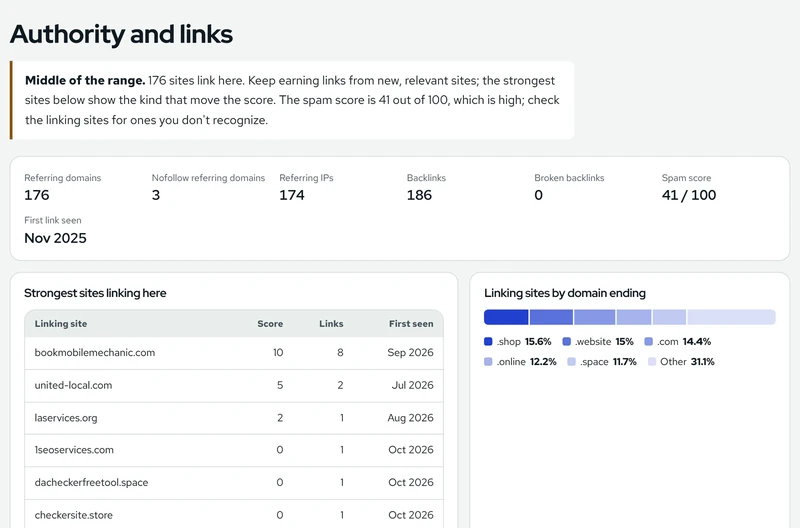
- Run an audit. Put your address into the free audit. The report shows your referring domains, your total backlinks and the strongest sites linking to you. Different link indexes find different links, so treat the count as an estimate.
- Use Google Search Console. If you own the site, its Links report lists the top sites linking to you. It only covers your own site, so it cannot show a competitor's links.
To see where you stand, run the same audit on the sites that rank above you. The gap in referring domains is often the clearest reason they outrank you. Our guide on how many backlinks you need walks through that comparison.
How to Earn More Referring Domains
The links that last are the ones people give because your site is useful to them.
- Get listed where your customers look. Trade groups, your chamber of commerce, local directories and supplier pages.
- Fix links that already point at you but break. If a site links to a page you deleted, the audit shows broken links pointing in. Redirect that old address to the right page and the link starts working again.
- Publish something worth citing. A clear guide, a local price survey you actually ran, or a tool people use. Reporters and bloggers link to sources.
- Ask the people you already work with. Partners, sponsors and clients often have a page where a link to you fits naturally.
Skip anything sold as hundreds of links for a small fee. Google's spam policies name buying or selling links for ranking as link spam, and those packages nearly always come from network sites that do not help and can hurt.
Sources
- Google Search Central, link best practices, opened October 17, 2026
- Google Search Central, qualify your outbound links, opened October 17, 2026
- Search Console Help, Links report, opened October 17, 2026
- Google Search Central, spam policies, opened October 17, 2026
Common Questions
Is a referring domain the same as a backlink?
No. A backlink is a single link. A referring domain is the website that link comes from. One site can send many backlinks but counts as one referring domain.
Do nofollow links count as referring domains?
Most link reports count the site either way, so it shows up in your referring domain total. But a nofollow link tells search engines not to treat it as a vote, so it adds little to your authority.
How many referring domains is good?
There is no fixed good number. Compare your count with the sites that rank on page one for the searches you want. Matching or beating them with real, related sites matters more than any single target.
Can a referring domain hurt my site?
Links from spam networks or unrelated sites built only to sell links can be a risk. One odd link is normal. A profile made mostly of them is worth cleaning up.
See where your own site stands. Links, Google rankings, a site crawl, mobile speed and your home page, checked in one report.
Run free audit