What are common SEO mistakes?
The most common SEO mistakes are missing or repeated page titles, pages that load slowly on phones, broken pages and links, thin or duplicate content, and links bought from spam sites.
At a glance
- Titles and headings left blank or repeated
- Slow load on phones
- Broken pages, redirect chains and blocked pages
- Thin pages and junk links
Mistakes on the Page Itself
These are the quickest to find and the cheapest to fix.
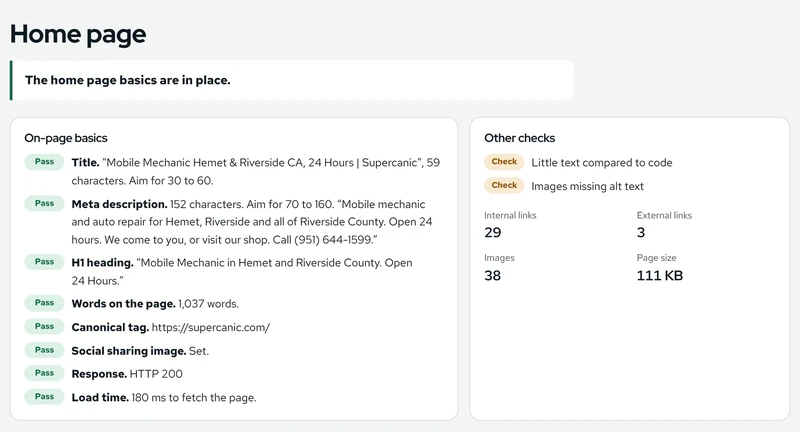
- Missing or repeated titles. Every page needs its own title that says what the page is about. Google's title link guide asks for a unique, descriptive title on each page. Many sites leave the same title on every page, often just the business name.
- Titles that get cut off. Search results show a limited width. A long title loses its end, which is often the part that mattered.
- No H1, or several. One clear main heading tells readers and search engines what the page covers.
- Skipped heading levels. Jumping from H1 straight to H4 makes the outline hard to follow.
- Images with no alt text. Alt text describes an image for screen readers and search engines. Google's image guide calls it the most important detail for describing an image.
- The words customers search are missing. If people search for a water heater repair and the page only says plumbing services, the page may not match.
The page checker flags each of these on any single page, with the reason beside every check.
Mistakes Across the Whole Site
These hide until something crawls the site the way a search engine does.
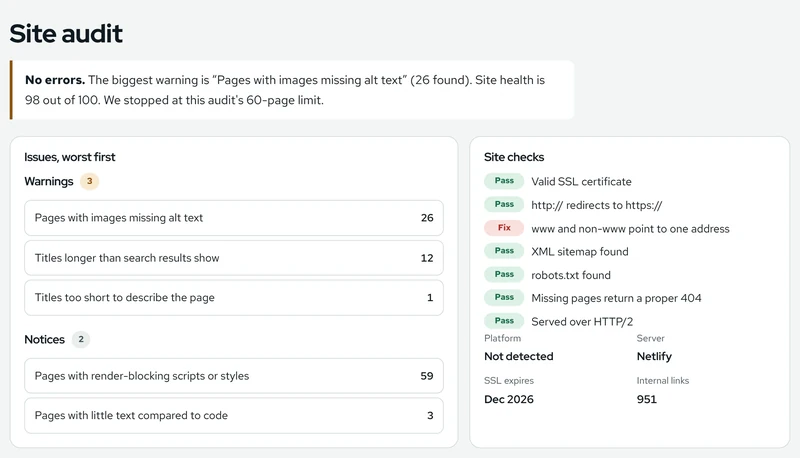
- Broken pages. Links that lead to pages that no longer exist waste visits and crawl time.
- Redirect chains. One old address points to another, which points to another. Each hop slows things down. Use a permanent redirect straight to the final page.
- Duplicate content. Several pages with nearly the same text compete with each other. Merge them or make each one clearly different.
- Thin pages. A city page or service page with two sentences rarely ranks. Give each page something real to say.
- Missing canonical tags. A canonical tag tells search engines which version of a page is the main one when the same page can be reached more than one way.
- Pages left blocked. A noindex tag or a robots.txt rule left over from building the site can quietly keep pages out of search.
An audit crawls your public pages and lists these problems worst first.
Mistakes That Make Phones Wait
Many people search from a phone, and a slow page can lose them before they read a word.
- Huge images. A photo straight from a camera can be many times larger than it needs to be.
- Too many scripts. Chat widgets, trackers and sliders all add load time.
- Fonts that block the page. If the page waits on a font server before showing text, phones sit on a blank screen.
- Content that jumps. Images and ads that load late push text around while someone tries to read or tap.
Each audit runs a mobile Lighthouse test on your home page and shows load timings such as Largest Contentful Paint, so you can see what a phone sees.
Mistakes With Links
- Buying cheap link packages. Hundreds of links for a small fee nearly always come from networks of sites built to sell links. Google's spam policies count buying links for ranking as link spam. They rarely help and can hurt.
- Ignoring links you already lost. When you delete or rename a page, sites that linked to it now point at nothing. Redirect the old address to the right new page.
- Weak internal links. Your own pages should link to each other with clear words. A page nothing links to is hard for search engines to find.
- Chasing the backlink total. The count of different sites linking to you matters more than the total number of links. See what a referring domain is.
Mistakes in How SEO Gets Done
- Never checking. Sites change. A plugin update, a new theme or a moved page can break things that worked last month. Check after every big change.
- Fixing small things first. Start with what blocks the most pages, like blocked pages or a broken template, before you polish one title.
- Writing for the wrong searches. Target the words customers actually type, not the words used inside the business.
- Expecting overnight results. Google's SEO starter guide says some changes take effect in a few hours and others take several months. Links and authority build over months.
The easiest way to start is to run a free audit, fix the top item on the issue list, and run it again. Curious what a full audit costs if you need more? See how much an SEO audit costs.
Sources
- Google Search Central, title links, opened October 17, 2026
- Google Search Central, Google Images best practices, opened October 17, 2026
- Google Search Central, redirects, opened October 17, 2026
- Google Search Central, canonical URLs, opened October 17, 2026
- Google Search Central, block indexing with noindex, opened October 17, 2026
- Google Search Central, spam policies, opened October 17, 2026
- Google Search Central, SEO starter guide, opened October 17, 2026
Common Questions
What is the most common SEO mistake?
Missing or repeated page titles are among the most common. They are easy to miss because the site still looks fine to visitors, but search results show the same vague title for every page.
How do I find SEO mistakes on my site?
Run an audit that crawls your pages and checks speed, titles, headings and links. It lists the problems worst first so you know where to start.
Can SEO mistakes get my site penalized?
Most mistakes, like slow pages or missing titles, just hold a site back. Buying links or hiding text breaks search engine spam rules and can lead to a penalty.
How often should I check my site for SEO problems?
After any big change, like a redesign, a new plugin or moved pages, and on a regular schedule such as once a month for a busy site.
See where your own site stands. Links, Google rankings, a site crawl, mobile speed and your home page, checked in one report.
Run free audit